
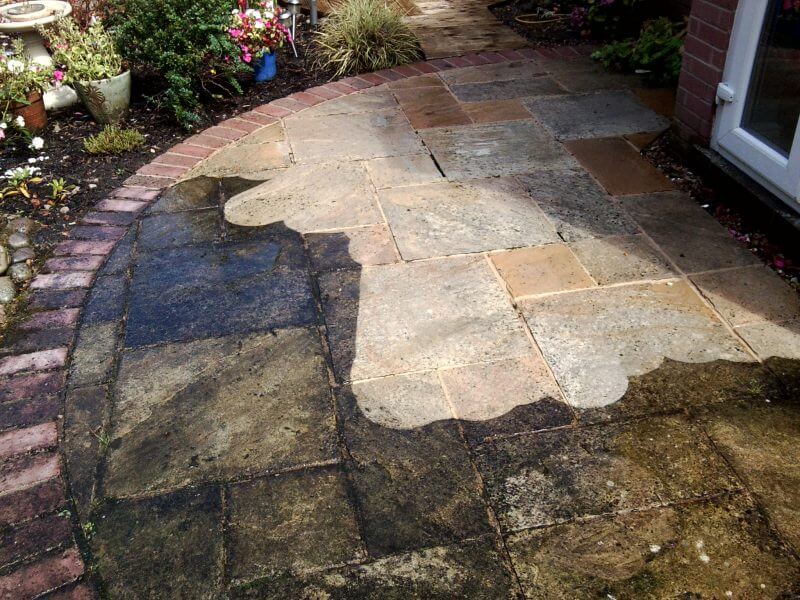
Why it happens
Shade, poor drainage and organic debris create a permanently damp film where algae and moss establish. North-facing areas, spots under trees and low points hold water longest and green up first.
What to do about it
Set the pressure to the substrate, not the stain.
- Clear debris and cut back overhanging growth so the surface can dry
- Match pressure and nozzle to the material — block paving, flags, concrete and stone all differ
- Treat with a biocide so the root growth dies rather than just the surface bloom
- Work in consistent overlapping passes to avoid banding and tiger stripes
- Re-sand block paving joints afterwards, because cleaning washes the sand out
- Improve drainage or trim shade where you can — this is what actually keeps it off
The mistake to avoid
Do not use a full-pressure zero-degree nozzle on soft flags, old concrete or pointing. It etches the surface, and etched surfaces green up faster next time.
How we handle it
Years of dirt, moss and algae lift off with proper pressure washing. We use adjustable-pressure gear that cleans block paving, patio slabs, decking, render and stonework without damaging the surface.
- Rotary surface cleaner on paving
- Adjustable turbo nozzle on stone
- Sodium hypochlorite on algae (rinsed)
- Kiln-dried sand for re-jointing
The service behind this guide
Driveways, patios, decking and exterior surfaces restored.
See Jet Washing